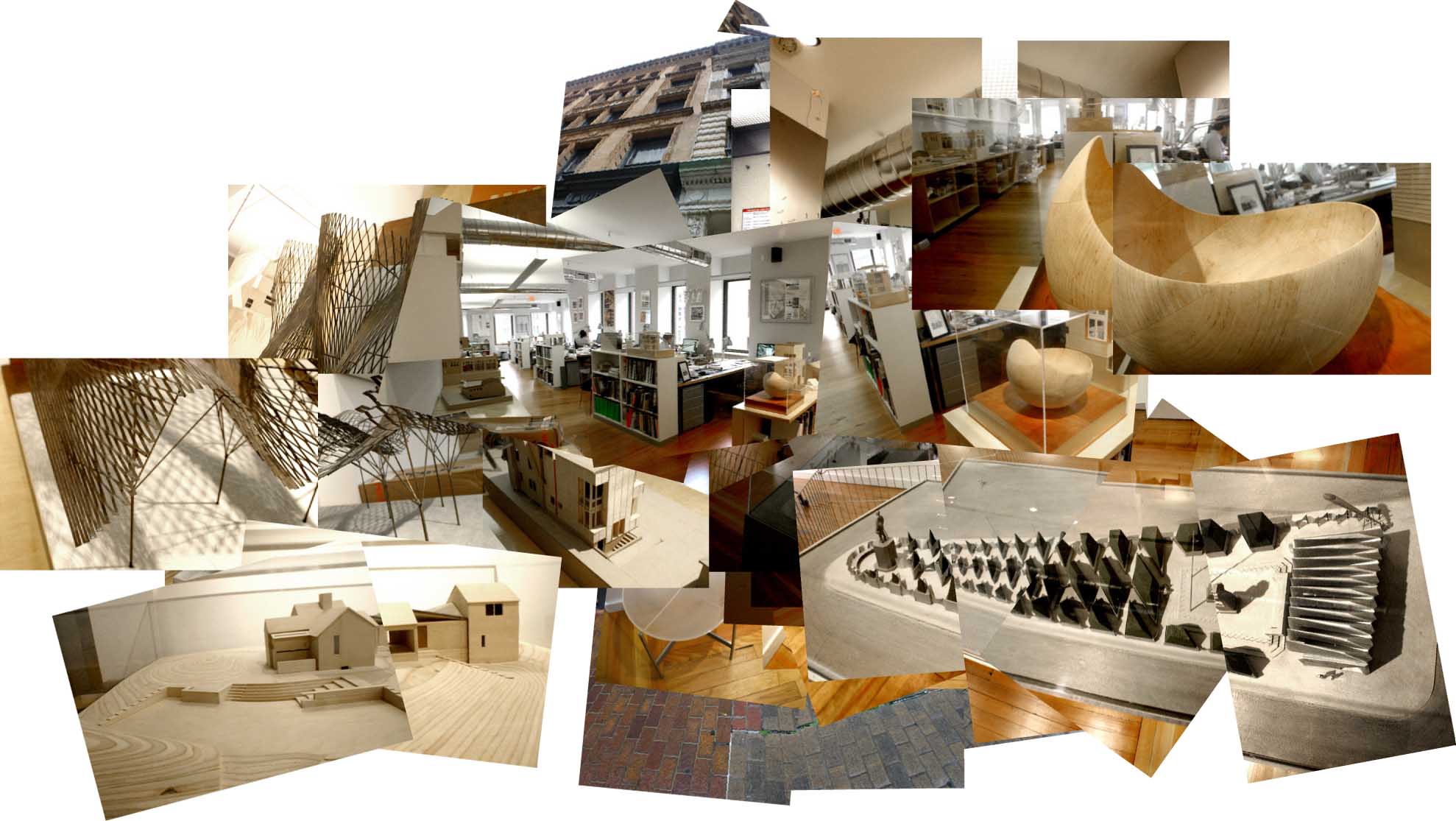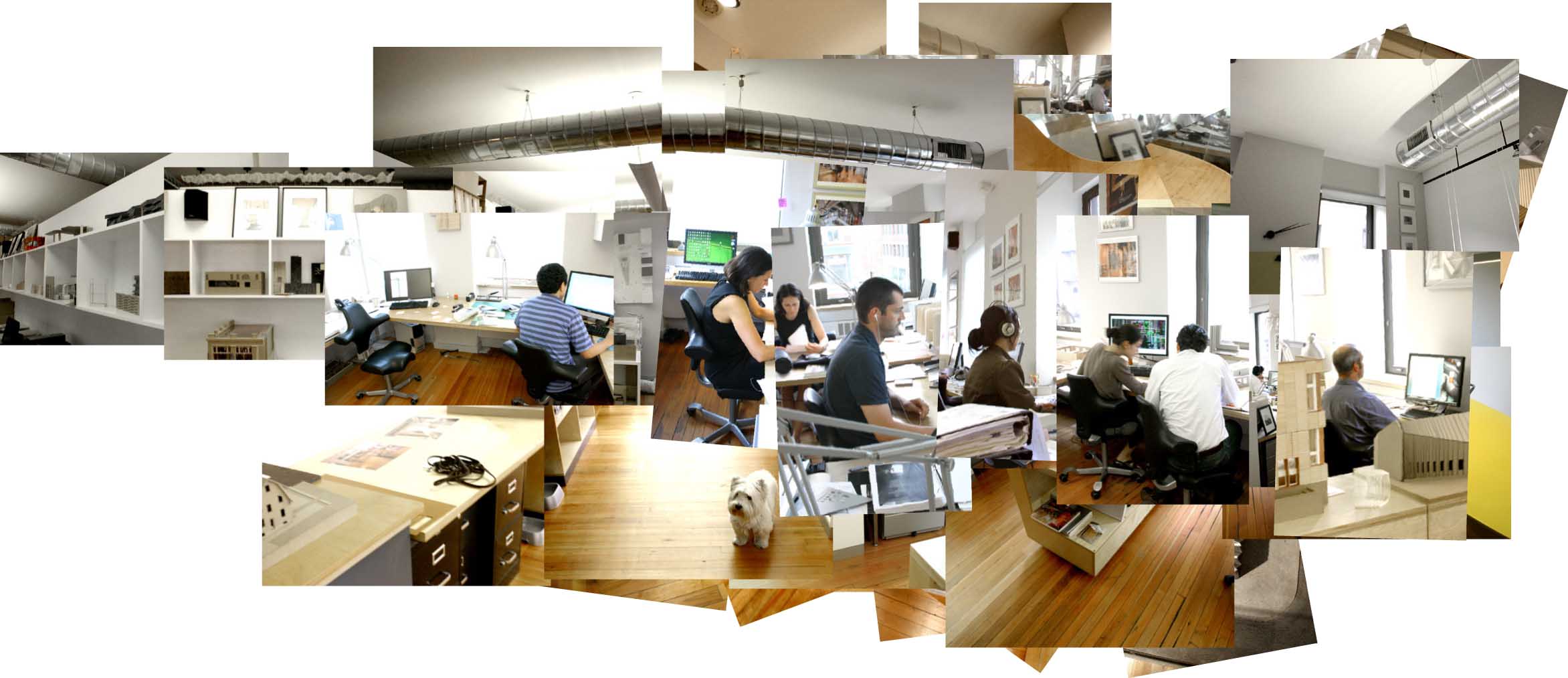
On December 10, the Rhode Island chapter of the American Institute of Architects held its annual awards ceremony at the Narragansett Towers in southern Rhode Island. This year we submitted East Side Addition (Residential), Old Stone House Inn (Adaptive Reuse), Old Stone House Spa and Restaurant (Interior), and Au Bon Pain (Commercial/Industrial) –all four received Merit Awards in their respective categories. Take a look at our submissions and view other winners on AIA/RI’s website.
I had the incredible experience of Pop!tech this past week. The theme was “America Reimagined” and some of the luminaries who spoke were: Dan Ariely, Will Allen, George Church, John Fettermn, Daniel Goleman, Tony Hey,Daniel Nocera, Gideon Obarzanek,Dean Ornish, Katy Payne, Michael Pollen, Reihan Salam, Paul van Zyl, Luis von Ahn, Michael Wesch….
It blew my mind.
Kyna Leski at Pop!tech 2009,
photo by Kris Krüg
I also got the opportunity to make a presentation, that I call, “Cohering Entropy: Navigating the Creative Process.” You can read my entire lecture notes here. Some notes from parts of my talk:
A strange thing happened about 20 years ago, very early on in my career as a teacher. I gave a group of students this painting by Paul Klee, called Polyphonically Enclosed White, and I asked them to build the third dimension using only white glue and white museum board.
One of the students, John Schroeder, decided that he would assign different heights to each colored rectangle. He couldn’t tell me why he was doing this…but there was something about his sense of purpose that made me step aside and watch. He worked through the night and built this object and when he was done he held it up to the indirect sunlight coming from the north side of the building.
This is what he saw. He had somehow osmotically channeled the work of Paul Klee.
I am showing you this, not to mystify things… in fact….there is a good explanation of why the light is refracted in this way given the differing sizes and heights of this cluster of tubes. But there isn’t an easy explanation of how John arrived at this idea. This is what interests me: how we get there…or how we navigate the creative process.
I have been surprised and awed by the imagination many times since then. It has made me think I am an atheist and believe I am not. This dilemma draws me into the creative process in my teaching and my work.
How an artist gets to a discovery or invention is mystified in our culture…it’s outside the umbrella of words like “talent” or “genius.” These words keep us from seeing what is at work and keeps it in the periphery and not to be depended upon. I like to call talent or creative abilities, intelligences. One of the most important intelligences for an artist is sensibility. “Sensibility”—keen intellectual perception—not the optics of the eye or capacity of the sensory organs—but how we take this information and form a concept of the world and our place it. Sensibility is on the cusp between percept and concept…which is at the heart of intelligence.
. . .
Search engines gather for us. The founders of Google, stated that “if you had all the world’s information directly attached to your brain, you’d be better off.” And that he and his partner’s ambition for “perfect search engine” would be one that could understand exactly what you mean and gives you back exactly what you want.”
My ambition is the opposite: Creativity….is not in knowledge but in the way towards knowing. Discovery is about arriving somewhere other than where you wanted or expected. And invention is moving outside of what is known.
. . .
Dwelling in uncertainty is key to growth and moving beyond the known through the imagination.
Creative, process are two words neither of which are creative and both are more processed than process.I think of it as cohering entropy. A creative work makes its own necessity by cohering what wasn’t before and now we don’t want undone. Cohering by recognizing connections from the astronomical to the metabolic, by putting together what precedes, follows and is next to: coherence gathered, and meaning made.
A new video of the Biltmore Hotel Porte Cochère project has been posted on 3six0’s YouTube channel. The evolution of the project is condensed into a 30 second animation that illustrates material reasoning driven by the net-like matrix of the hotel’s lobby ceiling, and the canopy’s function as a sheltering entry-marker that reverberates with the historic architecture of the Biltmore Hotel and the city of Providence.
Where is ground level after all, where is terra firma? Hard to tell. Instead there is a strange sensation of hovering in a zone of water and sky as the earth drifts somewhere in the mix. – Michael Cadwell
The Querini Stampalia Foundation by Carlo Scarpa is a powerful reminder of architecture’s capacity to embody particular qualities without necessarily being literal. Querini Stampalia was originally a family palace built in Venice during the 16th that was converted into a small foundation devoted to “promote study of useful disciplines and nation and foreign knowledge” (12). After a series of damaging floods in the early 1900’s, Carlo Scarpa was commissioned to renovate the ground floor in anticipation of future flooding.
exterior of the Querini Stampalia Foundation
What’s exiting in this work is Scarpa’s understanding of water as an unsettling force – as a medium caught between the solidity of the earth and the volatility of the sky. Water is at once dependable and volatile – it is present like the earth, but in constant flux like the sky. And as Cadwell points out, Venice embodies this precariousness. “In Venice, buildings do not spring from the earth – they tether themselves to the mud below, or they hover above it” (8-9). This aquatic quality, this precariousness, pervades Querini Stampalia through details that unsettle and keep us on edge.
ground floor plan
For instance, the main entrance to Querini Stampalia is a small footbridge leading from the adjacent campiello directly into the ground floor foyer. Seemingly simple, the bridge is slightly eccentric so that the entrance to Querini Stampalia lies slightly below the campiello. So even before entering the building, Scarpa calls into question the solidity of the ground that is so precarious in Venice. The bridge drops us below the established ground line and brings us closer to the water below.
entrance bridge
Inside the main gallery, we find a similar articulation of conflicting levels and an unsettling ambiguity regarding the location of water and ground. First, the gallery steps down from the entrance foyer, bringing the floor even further below the ground line outside. There are three columns in the space, but none of them align to establish a firm ground line. Finally, the floor is detailed for floods and wraps up the sides of the wall to define a waterline. Without being explicit, Scarpa places the visitor somewhere beneath the water, but where exactly is unclear. “So we are up to our ankles. The grass outside [in the courtyard] is above this line, but no matter, the water rises to our shins” (25). These waterlines all undermine any sense of a solid ground, but instead locate the room somewhere between the ebb of the tide. And though the gallery anticipates water and its presence can be felt throughout, the most unsettling part is the lack water and the lack of any reference to establish where that waterline actually lies. The gallery gives hints and suggests possibilities but provides no assurance. Instead it lies somewhere in the middle. Water is absent, but its presence is felt throughout.
A decade ago , the dream of virtual space was about to be realized, or so it seemed. Videoconferencing promised to eliminate the need for travel; the “glove” and VR glasses were ubiquitous features at malls as were elaborate 3D simulation pods. I remember architecture students at the time speculating about the end of architecture–who needs spaces for conferences,meetings, social interaction when all that can be done virtually. Oddly enough as the web has grown , virtual reality has become less about hardware and more about software ie social media 2.0. Seems virtual reality is getting more virtual. One major exception is the military use of virtual reality to wage combat at a distance.
Unexpected consequences are emerging :
On its face, it seems like the less stressful assignment. Instead of being deployed to Afghanistan or Iraq, some pilots and other crew members of the U.S. military’s unmanned Predator drones live at home in suburban Las Vegas and commute to a nearby Air Force base to serve for part of the day. They don’t perform takeoffs and landings, which are handled overseas. But the Predator crews at Nellis Air Force Base in Nevada “are at least as fatigued as crews deployed to Iraq,” if not more so, according to a series of reports by Air Force Lt. Col. Anthony P. Tvaryanas. The [reports] also showed that Predator crews were suffering through “impaired domestic relationships.”
Why is this? Part of the problem lies in what Tvaryanas calls the “sensory isolation” of pilots in Nevada flying drones 7,500 miles away. Although there are cameras mounted on the planes, remote pilots do not receive the kind of cues from their sense of touch and place that pilots who are actually in their planes get automatically. That makes flying drones physically confusing and mentally exhausting. Perhaps this helps explain the results of another study Tvaryanas published with a colleague in May, which examined 95 Predator “mishaps and safety incidents” reported to the Air Force over an eight-year period. Fifty-seven percent of crew-member-related mishaps were, they write, “consistent with situation awareness errors associated with perception of the environment” — meaning that it’s hard to grasp your environment when you’re not actually in it.
Aaron Retica New York Times December 14, 2008
Although these studies were limited, it does conform to our sense that seeing is not being. By working with concepts, plans, sections and other instruments, Architects are constantly looking at the third dimension as an equivalent of the other two. We move around, through designs, we make models, hold materials in our hands, look at architecture spatially. This effort to “be” in the world to inhabit “the flesh of the world” as Merleau-Ponty famously wrote about the third dimension, joins the haptic with the visual, or so we hope.
Over the past decade the explosion of design publications, print and digital, and the advances in 3D rendering have placed a premium on the image. One hallmark of our times is architecture as a spectacle; if it looks spectacular it will get press, regarless of it’s virtues or weaknesses. This creeping emphasis on the visual brings us back to the virtual. If pilots are losing their minds because of the loss of the environment and architecture is reduced to image–at least in publications, shouldn’t we give pause to how we consume and produce architecture.
It’s interesting that computer models, as wonderful a tool as they are, do not replace physical models. Could the touch, texture, light qualities and spatial nuance of physical models be what allows us to “grasp the environment’ in a way those pilots can’t? And as abstract as a plan or section is could it be that at a fundamental level these kinds of drawings allow metrics and order of the environment to be cognated, something the drone pilots were missing.
STIX and CIRCA have both been published in the current issue of SPA-DE (Space and Design Vol.11) as part of the magazine’s “International Review of Interior Design” issue. The inclusion of these projects in SPA-DE, a Japanese publication, follows our recent features in the Korean magazine, PLUS Architecture and Interior Design. (February #262 / May #265)
A project’s design gets launched by a diagram, a sketch that somehow holds together everything that is known about the project and can absorb what is coming. The sketch for the design of a chapel for Shepherd of the Valley, of Hope R.I., came out of many conversations and interviews with the parishioners, the two pastors and the building visions committee…their needs and aspirations for the church. SOV is the product of two churches, the Phenix and Hope Methodist Churches merging together in the seventies. Shortly after their merger they outgrew their prefab building and when we met them, we found that they outgrew their building again. The chapel is a part of a much larger master plan, also conducted by 3six0..which set the chapel’s footprint shape, size and location…a semi-attached pavilion that is a northern extension of the existing education wing. The western wall was determined not to be parallel to the eastern wall, but instead it would swing in, forming a trapezoidal plan. This would define a more open space on the exterior of the west side of the chapel.
The diagram gained insight as a kind of accident. In one of our presentations to the church, we realized with embarrassment that we had forgotten the spire on our model of the existing church. Then, after adding a spire to the model, we found that it kept being knocked off. So I thought, “what is a spire anyway?” and looked the word “spire” up in the dictionary. What I found addressed the purpose, history, aspirations of openness, expansion and the specific diagram of the chapel.
I found that the word, “spire,” comes from the Latin root, “spirare,” or “spirit.” “Spirare” is also the root of “inspire, ” “respire,” and “spiral,” a geometry that is always expanding and contracting like breath.
At the same time, we were starting to work on the chapel’s design, with the narrowing trapezoidal plan and its supporting perimeter walls. We found that if the ceiling’s geometry is square to each supporting wall, instead of being a compromised geometry in between the two walls, the lines of the geometry continue to spiral around like a string wrapping the space. This became a convincing order for the design of the chapel: the geometry of the ceiling/roof and floor spirals north setting the structure, windows, and ceiling/wall acoustic fins.
Now looking back at the facades of the historic churches…the ones that formed Shepherd of the Valley, you can see something that is very interesting.
The Phenix Church is on shown on top. It has its structure out of sight, within its skin of siding. The Hope Church, shown second, has its structure poking out from the skin of siding and its roof is sucked in. It is as though the two churches where inhaling and exhaling: the body carving a cavity, the skin taut, revealing structure on the inhale and the body and skin relaxing on the exhale.
The perimeter of the original walled city of Shanghai is still evident from aerial photography. The city wall was initially constructed in 1553 during the Ming Dynasty to protect the fishing village from Japanese pirates who were pillaging the coast. It is quite unusual for a village of such little importance to have an extensive city wall as the one that was constructed. This construction is testament to the strategic location of Shanghai on the Huangpu River just south of its convergence with the Yangtze River. The city wall was 8 meters high with a total length of 4.8 km.
After Shanghai became one of the treaty ports in the second half of the nineteenth century new urban development occurred to the north and west of the walled city. These European and American developments were referred to as the Concessions. Foreign residents in the Concessions lived and operated under their own governments and were exempt from Chinese law. The native Chinese population withdrew to within the city wall and the area became know as Old Town. The traditional Chinese character was preserved within the wall while the new architecture of the concessions was of a European style with traditional Chinese accents.
The city wall was eventually demolished and the moat was filled after the fall of the Qing Dynasty in 1912. The wall was replaced by two curving roads, Renmin Lu to the north and Zhonghua Lu to the south. Replacement of medieval city walls and moats with modern ring roads was a common occurrence in twentieth century Chinese cities. Nowhere is this as strongly recognizable as in Beijing, where the square city wall was replaced by the Second Ring Rd in the 1950’s.
Location of original Shanghai city wall shown in red
Locational of Beijing city wall and its southern extension
Today much of the architecture in this portion of the city retains the traditional scale and density of Old Shanghai. Many of the buildings are well over 100 years old and are in deteriorating condition. Electricity has been brought to the structures as evidenced by all of the overhead power lines, but most of the structures lack plumbing. Public latrines and sinks are located along the lanes. This lack of infrastructure and the low rise/high density nature of the neighborhood have created a truly active street life. Shops and markets line the lanes and the distinction between private and public is blurred.
Traditional housing within city wall
Currently there is much debate on how to handle these historic neighborhoods in quickly expanding Chinese cities. Activists are now speaking out against the widespread razing of the traditional urban fabric and are pushing for preservation. Preservation in the strictest sense is not a feasible option since much of the fabric is in such squalid condition and the needed infrastructure improvements are overwhelming. Turning the area into a “museum” is not a solution either since it would merely preserve the structures and not the active civic life.
Traditional building of Old Town
Portion of neighborhood being razed
With its transition from a production economy to a consumer economy, China is realizing its great potential as a tourism destination – both to domestic and foreign visitors. This opportunity has not been missed in Old Town with the development of Shanghai Old Street, a new shopping district created in the traditional architectural style complete with Starbucks and Pizza Hut.
Shanghai Old Street - modern recreation of traditional structures
The preservation/development situation in Shanghai is considerably different than in Beijing where the medieval urban fabric extends across the whole city and is quite expansive (although quickly disappearing). Since Shanghai was a village until fairly recently its area of old urban fabric is rather small and concentrated and is definitely of a manageable scale.
In any case it will be interesting to see how Shanghai responds. We will certainly have our answer within the year as the Shanghai World Expo 2010 site is a short walk to the south of Old Town.
3six0 was commissioned to restore and renovate the much loved but well worn Stone House Inn in Little Compton, Rhode Island into an authentic destination hotel. The renovated project is comprised of 12 hotel units, two restaurants and a spa.
The original Stone House was constructed in 1854 as a private residence in an Italianate style but soon after was converted into an inn.
3six0’s challenge has been to balance the preservation of the historic Inn with the client’s modern needs. The team’s approach has been to integrate green building technologies wherever possible with the implementation of its restoration and its contemporary use.
The project is currently under construction. Here are some construction photos of the Inn …