February 23rd, 2009 § Manuel
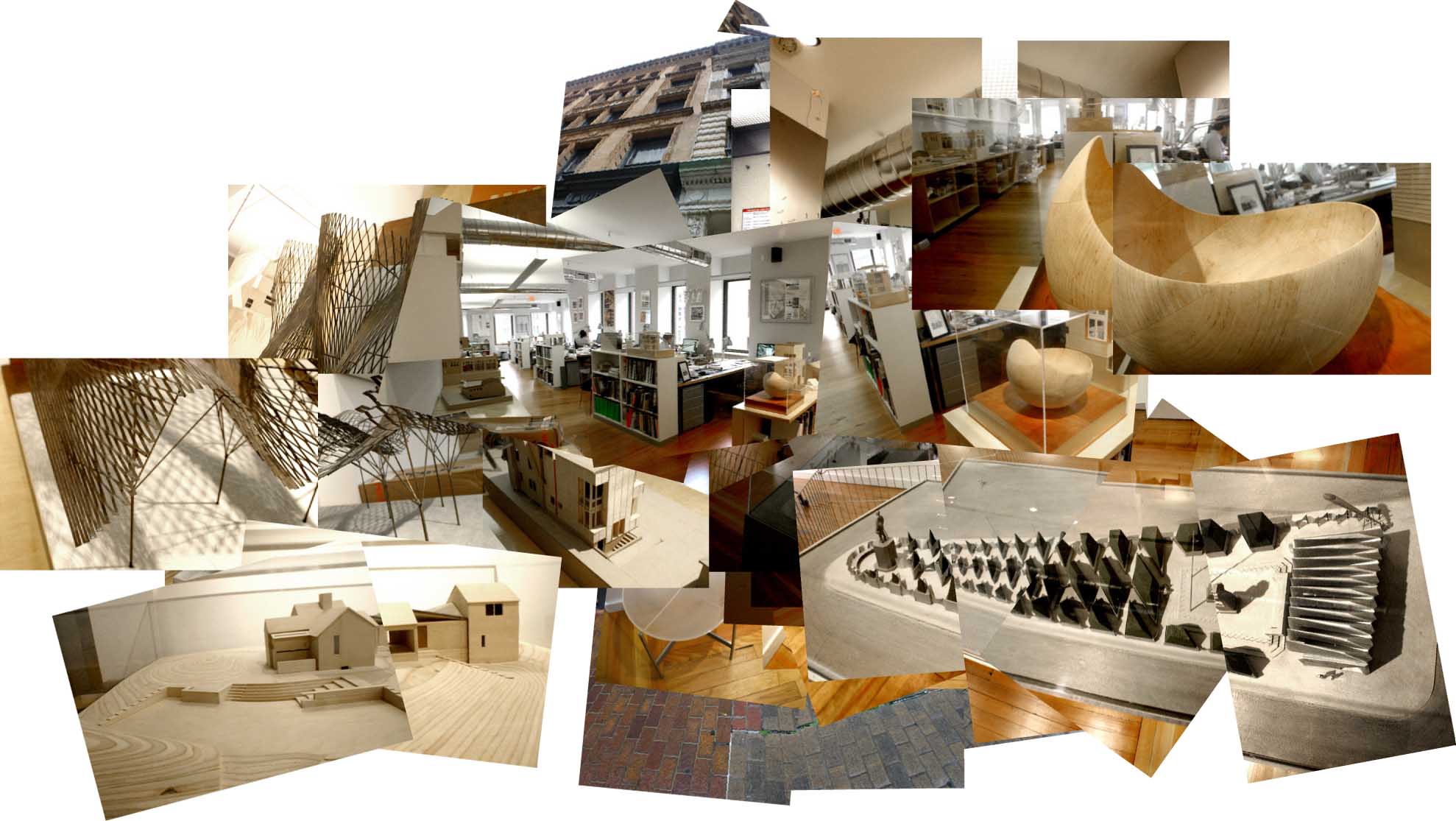
The RISD Faculty Biennial just opened at the Chace Center last week and 3six0 has several pieces on display.

Model of Stix restaurant in Boston

Model of chapel at Shephard of the Valley Church
In addition to full time faculty members, Kyna Leski and Chris Bardt, all four part-time faculty members in the office, Aaron Brode, Olga Mesa, Jack Ryan and Manuel Cordero, each submitted office work for inclusion. Go check it out…it’s on display until March 15, 2009.
February 20th, 2009 § Karynn

On December 17, 2008, the AIA New York launched its Not Business as Usual initiative in an effort to unite the architecture and design community around issues relating to the current economic crisis: a slowdown in new projects, downsizing of firms, current projects put on hold, a lack of positions available to recent graduates. An “Opportunities Fair” to be held on February 25 will bring together representatives from community organizations, non-profits, schools, and training programs to share information about volunteer opportunities, continuing education, and other opportunities. This made me think, how can architects and architecture firms contribute to our communities during this economic crisis? Certainly we can offer our professional services pro bono, but we can also offer non-professional skills that would still greatly contribute. Might we volunteer at a food bank or repair a rundown school? Could we clean up our parks or run for the cure? Could we get inventive and create volunteer opportunities that might also draw on our skills as designers and experts of materials?
February 6th, 2009 § Karynn

Sometimes we only learn that we’ve been written up in a newspaper or magazine after a call or an email from a friend of the firm. This morning, we received a tip that 3six0 appears in the most recent issue of Providence Business News. It’s a recap of the Rhode Island AIA awards from December (3six0 won two!), but we still highly value PBN’s coverage because it introduces our work to those outside of the architecture community. Thank you PBN for your coverage and for keeping architecture relevant in the business community.
Graphics from Snap2Object.com
February 6th, 2009 § Jack

I have recently returned from an extended 26 day trip to China. I made two earlier trips to China in 2004. On the previous visits my travel was limited to the three major cities of Beijing, Shanghai and Chongqing due to the shorter time period of 10 days each trip. This time I was able to visit some of the more remote cities and locations missed on the previous trips and revisit Beijing and Shanghai to observe the epic changes there in just 4 short years.
The many contradictions and struggles within China today are compelling. A rich culture dating back to ancient times transitioning into the modern era at a speed and scale that has never been witnessed. What happens in China, the third largest country in the world with 20 percent of the world’s population, will undeniably shape the immediate and distant futures of us all.
On this blog I will be posting a travel journal of sorts with photographs, observations, sketches and other miscellaneous information from the trips. Labeled on the map are the cities and villages visited while in China.
2 Comments
February 4th, 2009 § Olga
[youtube=http://www.youtube.com/watch?v=iiJhRjBEm6o]
2 Comments
February 2nd, 2009 § Manuel
Over the last week we all shook our heads in frustration at the excesses of Wall Street and the banks that we, as taxpayers, are supporting. We heard of corporate jets, billions in bonuses and an $87,000 area rug.
This all made me think of the streets of Buenos Aires after the economic collapse of Argentina in 2001. Nearly a year after the protests quieted, these pictures captured the collective frustration of the Argentines as expressed on the canvas of architecture. Old, new, local and foreign: the banks in Buenos Aires had been attacked, vandalized and covered with graffiti. The graffiti accused the banks of robbery and even murder. Architecture essentially became a proxy for failed government intervention and a symbol of fiscal malfeasance, and as such bore the brunt of the populace’s anger and frustration. In response, banks were forced to board up all their doors and windows, only allowing entrance through a door (often steel) that was heavily guarded and equipped with a metal detector. The banks, so often rendered in an architecture of strength, transparency and brilliance were suddenly forced to recede into an architecture of conflict.

Lady snears in front of Bank of Boston in Buenos Aires

Citibank in Buenos Aires
Last week we posted about the authenticity of materials and by extension of architecture. The underlying idea that architecture can embody meaning and breed comfort points to the symbolic power of building. Buildings express our yearnings and our fears – an expression in built form of a collective will. One might say that the architecture of the last decade has been characterized by optimism, flamboyance and even excess. This begs the question of what our response will be to the stark economic and social climate that we face.
2 Comments
January 30th, 2009 § Karynn
January 28th, 2009 § Chris
From the New York Times, January 28, 2009
And in Florida, not far from the Palm Beach clubs where Mr. Madoff wooed some of his investors, George L. Theodule, a Haitian immigrant and professed “man of God,” promised churchgoers in a Haitian-American community that he could double their money within 90 days.
He accepted only cash, and despite the too-good-to-be-true sales pitch, he found plenty of investors willing to turn over tens of thousands of dollars.
“The offices were beautiful, and I was told it was a limited liability corporation,” said Reggie Roseme, a deliveryman in Wellington, Fla., who lost his entire savings of $35,000 and now faces foreclosure on his home.
This brings to mind the question of authenticity. Ponzi schemes, shams that we can believe in, until the truth comes out, prey on our desires and weaknesses. Our willingness to rely on appearances for signs of authenticity (The offices were beautiful) points to questions about architecture’s role in such deceptions.
It’s been said that ”Art is a lie that tells the truth” . The history of architecture, reflects an ambivalence about “truth”. Architecture operates like language, representing but not necessarily embodying, and architecture is a constructed embodied, materialized phenomenon that is primarily experienced. We read and experience architecture simultaneously. Geometry, space, materials, tectonics order form, form an order which we would hope is revelatory, engaging and celebrating our humanity , rather than deceitful, obscuring and controlling.
The predominance of vision has effected the way we think about materials. As more and more communities employ “stampcrete” and if they can’t afford that, “stamphalt” in public spaces, the erosion of values is painfully obvious. The attitude of “as long as that stuff looks like brick, it’s OK” is exactly what got the ponzi scheme victims into trouble. Actually all the use of fake materials is sort of like a ponzi scheme–you simply put the day of reckoning off until the whole thing fails and at great expense you end up doing what you should have done the first time around. Materials carry memory, and the replacement of materials with facsimiles destroys memory, with it the hard won truths and values of our society. As an example I’ve posted two images of bricks one of painted stamped asphalt and the other of 19th century brick pavers.


The inadvertent marks of the makers, of the hands that handled the wet clay can be seen in the lower image, the memory of the lives that made these bricks. The moss growing between each brick reveals an unanticipated symbiosis of inert and living matter. the bricks, slightly uneven gently accommodate the pushing of tree roots below without cracking or failing. The stamphalt has none of this capacity to hold time and life–no capacity for memory and for that matter, imagination. The fact that it is unsustainable and unrecyclable is no coincidence. Whenever we remove the dimension of time and the capacity to remember from materials, we fall prey to appearances and hidden costs, not only economic and environmental but cultural and societal.
5 Comments
January 26th, 2009 § Nick

a view of the interactive book @Issuu.com
We’ve recently uploaded our printed portfolio to Issuu.com where it can be viewed as a virtual book, embedded into other sites, or shared with friends on the web. This same book can be purchased in printed form at Blurb.com. We’re currently developing a series of smaller format, soft-cover books that will soon be posted on both sites–please check back soon.
2 Comments
January 23rd, 2009 § Karynn

According to Trendhunter.com, 3six0 is a trendsetter in restaurant design. The site features a unique set of tables our firm designed for STIX Restaurant and Lounge in Boston: the tables fold up into the walls allowing the space to easily transform from a dining area into a dance floor. This is just one of three restaurants that 3six0 designed around the theme of motion. Achilles, also in Boston, transforms from a boutique into a restaurant, and Circa, located in Memphis, uses wine racks that double as screens and create optical illusions as visitors walk through the space.